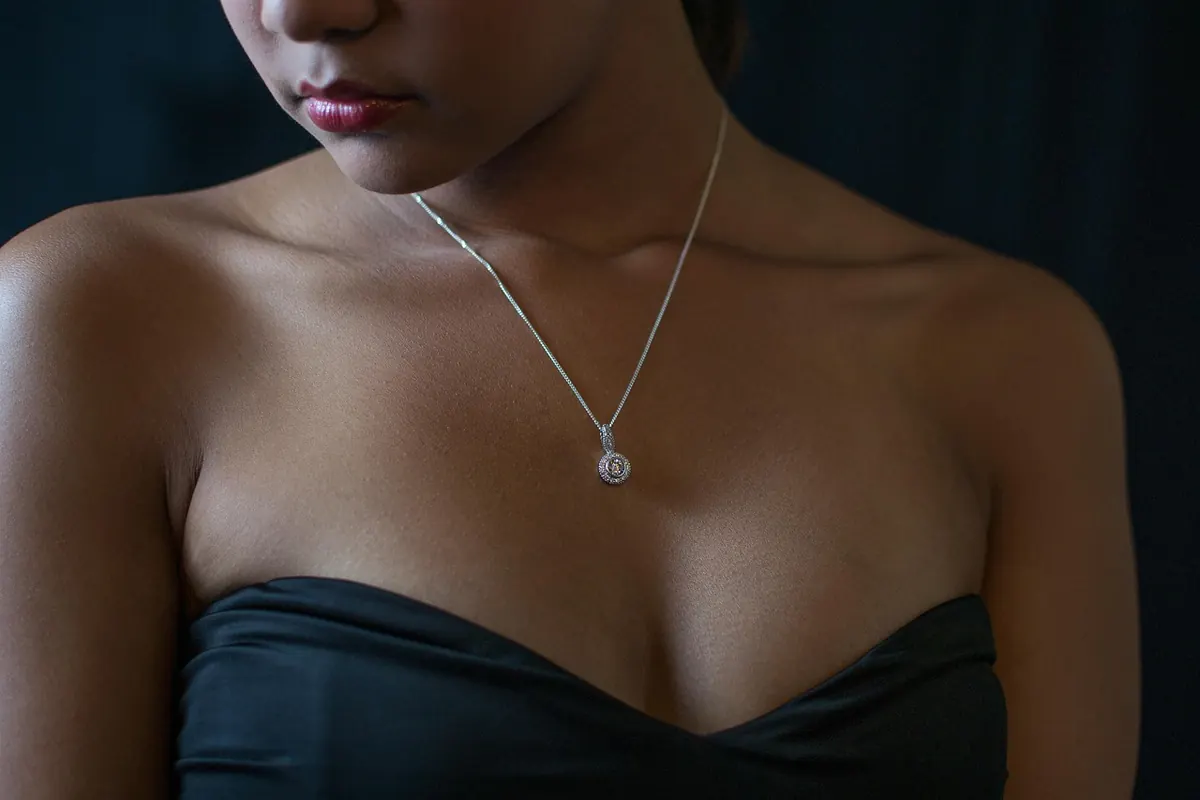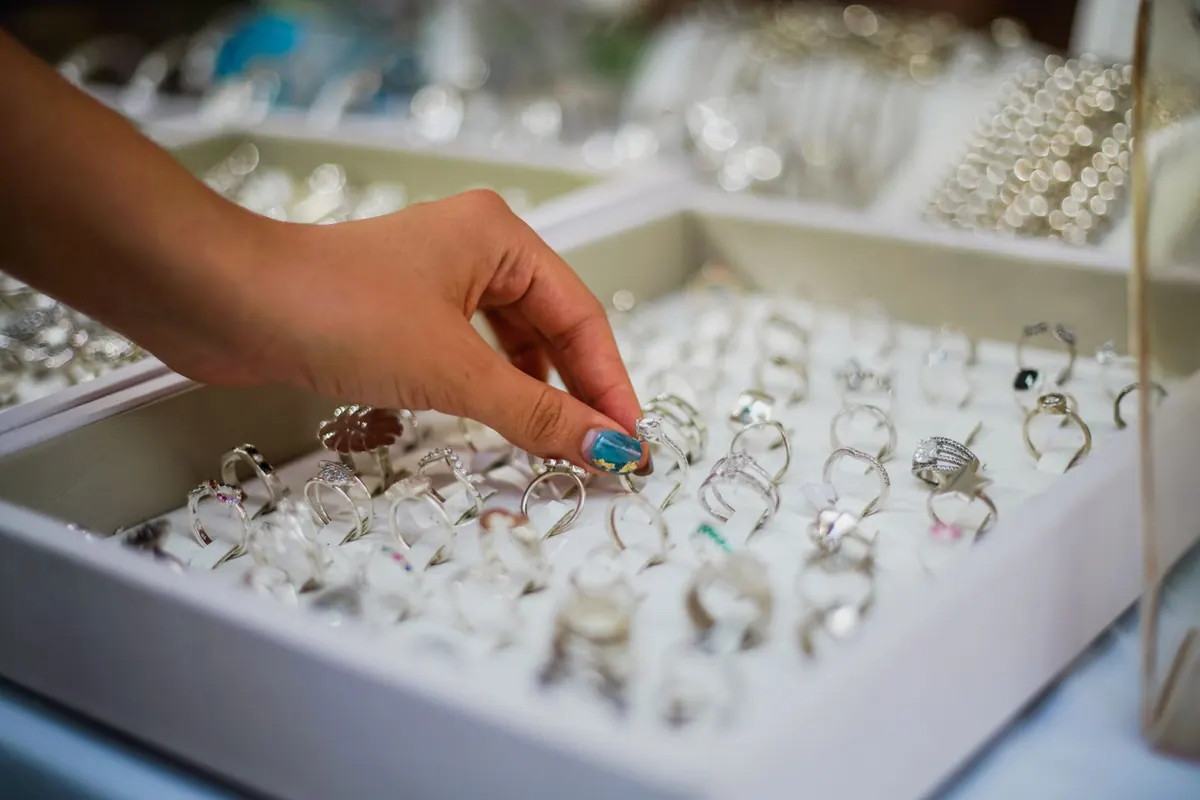
Two necklaces hang side by side in a display case. Both are silver-coloured, both catch the light in the same soft way, and from a foot away they look identical. Six months later, one still looks like the day it was bought. The other has dulled, or gone faintly yellow where the chain rests against your neck. The difference was never visible on day one — it comes down to what sits underneath the surface.
What sterling silver actually is
Sterling silver is an alloy: 92.5% pure silver mixed with 7.5% of another metal, usually copper. Pure silver, sometimes called fine silver, is too soft for a necklace that has to survive a clasp, a swinging pendant and years of daily wear. It bends and scratches if you look at it wrong. The copper gives the metal enough backbone to hold its shape and take a polish.
That ratio is why you will see "925" stamped on a clasp or a tiny tag beside the catch, and sometimes "Ster" or "Sterling". In the UK and several other countries, silver items above a small weight threshold must carry an official assay office hallmark, so a proper stamp is a legal claim about content rather than decoration. You may also come across Argentium sterling, a modified version that swaps some of the copper for germanium and resists tarnish for noticeably longer.
How silver plating works
Silver-plated jewellery starts with a core of something else — brass, copper, a nickel alloy, occasionally steel — and gets a thin layer of silver bonded to the surface, usually by electroplating. That layer is measured in microns, and in fashion jewellery it is often very thin indeed. The piece looks like silver because the outside is silver. It just is not silver all the way through, and the layer can be worn away by friction, sweat and cleaning.
Three labels worth knowing
- Sterling / 925: solid 92.5% silver throughout the piece, including the chain and the clasp.
- Silver plated / silver on brass: a base metal core with a silver coating. Older pieces may be marked EPNS.
- Silver tone or silver-coloured: no silver content at all — stainless steel, aluminium or a plated alloy chosen for its colour.
- Vermeil: sterling silver with a thick layer of gold over it. Underneath, it is still solid sterling.
Why one tarnishes and the other wears through
Tarnish is not dirt. It is a chemical reaction between silver and sulfur compounds in the air, on your skin and in cosmetics, producing a dark silver sulfide on the surface. Sterling contains copper, which speeds that reaction up, so a sterling chain left in a drawer will darken faster than the same piece worn regularly. The good news is that this is a surface change. A silver polishing cloth or a jeweller's buff removes it and the metal underneath is untouched.
Plated jewellery tarnishes too, but it has a second, more serious problem: the plating thins. The places that rub most — the nape of the neck, the jump ring, wherever a pendant slides — are the first to go. Once the coating is breached, the base metal shows through, and you get a yellow patch, a dark line, or a greenish mark on your skin. That is not tarnish and it will not polish out.
Which one lasts longer?
A well-made sterling necklace, worn sensibly, is a decades-long object. It can be polished, re-polished and, if a link stretches, repaired by a jeweller. It can be passed on. A silver-plated necklace typically looks its best for months to a couple of years, depending on how often it is worn, how much you sweat, and whether you spray perfume near it. Replating is possible on some pieces, but it often costs more than the necklace did.
A sterling necklace can be restored. A plated necklace can only be replaced — or replated at a price that rarely makes sense.
Cost, value and resale
Sterling silver has a material value that tracks the silver market, which is why a heavy sterling chain costs what it does and why it holds some resale value even when the design goes out of fashion. Silver-plated pieces are priced for the design and the labour, not the metal, and they have almost no resale market. Neither is a bad buy — they are just answering different questions. If you want a piece to wear for a season and change with your mood, plating is a sensible way to spend less. If you want something you will still be reaching for in ten years, the solid metal is the cheaper choice over its lifetime.
Care that actually makes a difference
For sterling silver
- Wear it. Light friction from clothing slows tarnish; long storage accelerates it.
- Put it on last and take it off first — perfume, hairspray and sunscreen are harder on silver than sweat is.
- Wipe with a soft dry cloth before storing, not after. Oils and moisture start the reaction.
- Keep it in an airtight bag or a lined box, ideally with an anti-tarnish strip, and stop pieces touching each other.
- Remove it for swimming, showering, cleaning and anything involving chlorine or bleach.
- Use a silver polishing cloth or a silver paste on plain surfaces. Skip liquid dips on antiqued or oxidised finishes, which strip the darkening that gives the design its depth.
For silver plated
- Keep it dry. Water, sweat and cosmetics all shorten the life of the coating.
- Wipe gently with a soft cloth after wearing. Never use abrasive polishes, scouring pads or ultrasonic cleaners.
- Avoid silver dip entirely — it can lift plating rather than clean it.
- Store flat or hanging so chains do not rub against each other, and keep the drawer dry.
- Treat it as occasional-wear jewellery rather than a daily staple. That single habit can double how long it looks good.
Choosing between them
Ask yourself three questions. How often will you wear it? If the answer is most days, next to your skin, buy sterling — the maths works out, and you will not be watching the chain for bald patches. Is it a trend piece you will happily retire in a year? Then plating is fine and you can put the savings into something else. And do you have sensitive skin? Base metals often contain nickel, a very common trigger for itching and redness, so solid sterling or a nickel-free alternative is the safer bet. If a necklace makes your skin react, stop wearing it and speak to a GP or dermatologist rather than trying to guess the cause.
One last practical tip: check the clasp, not just the chain. It is the part you touch every time you put the necklace on, and it is usually the first thing to fail on a plated piece and the first thing worth repairing on a sterling one.
Photo: YakupIpek / Pixabay